0
Skip to Content
Museum of the Creative Process
Institute
Premise
Origins of the Theory
Psychology as a Science
The Unconscious
Books
Syndroms and Modalities
Assessment Theory
CAB Validations
Conflict Resolution as Morality
Reviews
Patient Reviews
Ethical AGI
Exhibits
Core Curriculum
Self-Assessment
Case Studies
Mission
Program Overview
Retreats
Think Tank Invitation
Visit Us
Museum of the Creative Process
Institute
Premise
Origins of the Theory
Psychology as a Science
The Unconscious
Books
Syndroms and Modalities
Assessment Theory
CAB Validations
Conflict Resolution as Morality
Reviews
Patient Reviews
Ethical AGI
Exhibits
Core Curriculum
Self-Assessment
Case Studies
Mission
Program Overview
Retreats
Think Tank Invitation
Visit Us
Institute
Folder: Formal Theory
Back
Premise
Origins of the Theory
Psychology as a Science
The Unconscious
Books
Syndroms and Modalities
Assessment Theory
CAB Validations
Conflict Resolution as Morality
Reviews
Patient Reviews
Ethical AGI
Exhibits
Folder: CAB Education
Back
Core Curriculum
Self-Assessment
Case Studies
Folder: About
Back
Mission
Program Overview
Retreats
Think Tank Invitation
Visit Us
 The process is a sequence of formal transformations; an equilibrial system, illustrated by the balance of a scale. The unconscious tips the scale toward resolution, transforming passivity to activity, antagonism to cooperation, and alienation to mut View fullsize
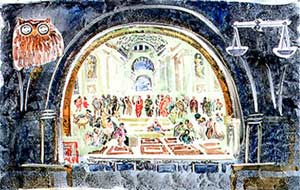
 The conflict resolution process is the unit of moral order. It mandates deliberate conflict resolution as the transformation of passivity to activity, of antagonism to cooperation, and of alienation to repect. The universal laws of morality, coincid View fullsize
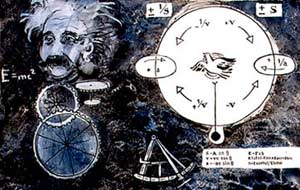
 The process is a sequence of energetic transformations, like the pendulum oscillation. It abides by the laws of physics, but unlike the pendulum, the process upgrades order; it increases negative entropy. View fullsize
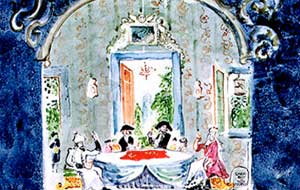
  Judaism  illustrates the assertiveness syndrome. Jacob, the favored son of a powerful mother, is assertive. He extracts blessings from his father and wrestles with God. Becoming empowered as Israel, he is respectful of his discriminated brothe View fullsize
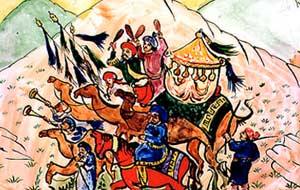
  Islam  illustrates the dominance syndrome. Mohammed espoused dominance, the relational choice attributed to Ishmael. Ishmael was the first born son of Abraham and Hagar. Hagar and Ishmael were banished to the desert. Feeling unjustly deprived, View fullsize
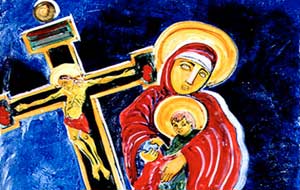
  Christianity  illustrates the subordinacy syndrome. Jesus, the son of an unwed mother, espoused cooperation, non-violence, asexuality, and self-sacrifice. It is the relational choice of surrender and hope. View fullsize
 The process is a sequence of formal transformations; an equilibrial system, illustrated by the balance of a scale. The unconscious tips the scale toward resolution, transforming passivity to activity, antagonism to cooperation, and alienation to mut
 The conflict resolution process is the unit of moral order. It mandates deliberate conflict resolution as the transformation of passivity to activity, of antagonism to cooperation, and of alienation to repect. The universal laws of morality, coincid
 The process is a sequence of energetic transformations, like the pendulum oscillation. It abides by the laws of physics, but unlike the pendulum, the process upgrades order; it increases negative entropy.
  Judaism  illustrates the assertiveness syndrome. Jacob, the favored son of a powerful mother, is assertive. He extracts blessings from his father and wrestles with God. Becoming empowered as Israel, he is respectful of his discriminated brothe
  Islam  illustrates the dominance syndrome. Mohammed espoused dominance, the relational choice attributed to Ishmael. Ishmael was the first born son of Abraham and Hagar. Hagar and Ishmael were banished to the desert. Feeling unjustly deprived,
  Christianity  illustrates the subordinacy syndrome. Jesus, the son of an unwed mother, espoused cooperation, non-violence, asexuality, and self-sacrifice. It is the relational choice of surrender and hope.


© 2025 Museum of the Creative Process.

The Wilburton Campus,

257 Wilburton Drive, Manchester Village, VT.

PO Box 468, Manchester VT, 05254

802 379 6350,

moralscience@hotmail.com